Folk Taboos and Rituals for Warding Off the Evil Eye
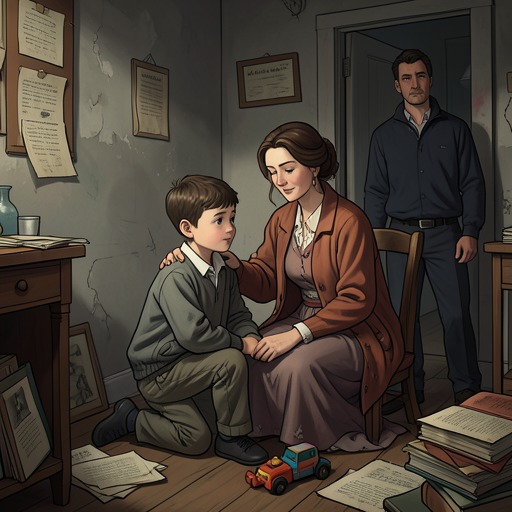
The Painted BirdFolk Taboos and Rituals for Warding Off the Evil Eye presents the gaze as a force that could injure, heal, or influence the fate of people and animals. Its customs turn an invisible danger into repeatable actions: avert the eyes, spit three times, cross oneself, or perform a prescribed protective rite. The system is not simply a set of prohibitions. Under Olga the Wise One, the boy learns that the same feared gaze can also be used therapeutically, a tension that makes looking both a risk and a form of care.
Belief and the Danger of Looking
Marta explains illness as something that can enter unseen, through air, water, contact with animals or people, and, in her account, the gaze of a person with dark eyes. She warns the boy not to look directly into her eyes or those of the household animals. If he does so accidentally, he must spit quickly three times and cross himself. The ritual gives a fixed response to a threat that is otherwise described as covert and difficult to anticipate.
The fear shapes ordinary conduct. When Marta suspects the boy of causing bread dough to sour, she withholds bread as punishment and undertakes a household cleansing: she scatters goose down over burning coals and blows the smoke around the room while reciting incantations. She then declares the spell lifted; the next baking succeeds. The episode places a practical household problem inside a supernatural explanation, and gives the ritual a visible outcome within Marta’s understanding of events.
The boy’s appearance and gaze are also interpreted through Olga the Wise One’s teachings. She calls him the Black One and tells him that an evil spirit inhabits him, recognizable through his bewitched eyes. In this account, the eyes may cast a spell without the person knowing it: looking at a healthy child, a calf, or grass could bring wasting, sudden death, or spoiled hay. The belief therefore assigns risk not only to the person who looks, but also to the unwitting person whose gaze is treated as a source of harm.
A Gaze Used for Healing
Olga’s teaching complicates the rule of avoidance. She says bewitched eyes can remove a spell as well as cast one. When the boy helps her treat illness, he must look at the person or animal while keeping his mind focused only on the disease he is trying to drive out. In this practice, looking is not inherently harmful: its effect depends on how it is directed and understood.
The treatment of a woman with abdominal pain shows how the belief becomes a shared procedure. Olga instructs the boy to massage the woman’s abdomen and keep staring at it while she mutters words and makes signs in the air. The boy’s gaze is thus incorporated into Olga’s work, alongside touch, spoken formulae, and gesture. The practice also gives the child an active role in the village’s care for the sick, even as he is taught that his eyes may endanger others.
Olga’s instruction comes through a relationship formed in the hut and during winter storms, when the two sit together and she tells him about God’s children and Satan’s spirits. Although she speaks in a dialect he does not initially understand, they come to understand one another. The rules of the gaze are part of this wider body of knowledge: they describe both the dangers Olga believes surround the boy and the procedures by which he can help her respond to illness.
Protection in Village Life
The boy’s position as a supposed source of danger has consequences beyond the treatment room. Olga sometimes suspects him of being a vampire and gives him a bitter elixir and garlicked charcoal to restrain the spirit she believes possesses him. When he walks through the village alone, people cross themselves; pregnant women flee, and some peasants set dogs on him. He stays close to Olga’s hut, where her presence protects him from these reactions. These responses show how supernatural beliefs can organize social behavior as well as ritual practice.
Olga herself is respected, and her presence makes the boy feel safer. Villagers ask her to protect cattle from malicious spells by sprinkling their eyes before they are taken to market. She also teaches people to spit three times when purchasing a pig and to feed a heifer specially prepared bread containing a sanctified herb before mating it with a bull. These customs extend protection beyond the human gaze to animal health, fertility, and exchange.
Her authority also enters decisions about buying livestock. No one in the village will buy a horse or cow until Olga has judged that it will remain healthy. She pours water over the animal and observes how it shakes itself; her verdict can determine both the price and whether the sale proceeds. The sequence is not identical to the practice of sprinkling cattle’s eyes, but both place animal welfare and commercial decisions within a framework of ritual protection and trusted interpretation.
The System’s Tensions and Limits
The rules offer ways to respond to uncertainty, but they do not guarantee control. The boy must guard his gaze because it may cause harm, yet Olga also relies on that gaze to treat the sick. Ritual precautions can accompany familiar activities such as baking or buying livestock, but the village’s fear can also isolate the boy and expose him to hostility. Protection is therefore unevenly distributed: Olga’s standing shields him when he is with her, while villagers’ suspicions make solitary movement dangerous.
The account distinguishes belief from demonstrated medical effect. Olga’s customs are presented through her explanations, the boy’s participation, and the villagers’ reliance on her judgment; the narrative does not establish that supernatural forces cause illness or that the rites objectively prevent it. Their significance lies in how they make perceived danger actionable. Averted eyes, repeated spitting, smoke, herbal food, and a healer’s verdict give the community procedures for confronting risks it cannot otherwise see, while the boy’s double role—as feared bearer of dangerous eyes and apprentice instrument of healing—exposes the system’s central contradiction.